
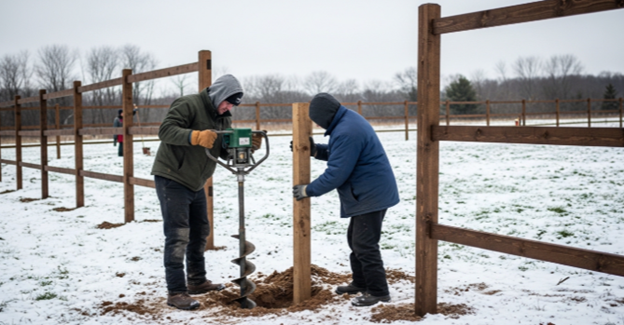
Installing a fence in the winter might seem like a daunting task. Many homeowners assume that frozen ground, snow, and frigid temperatures make fence installation impossible. However, with the right planning, materials, and professional approach, winter fence installation is not only feasible it can even offer unique advantages. In this comprehensive guide, we’ll answer the question “can you install a fence in the winter?”, explore the challenges, provide a step-by-step guide, compare methods, and address common FAQs so you can make an informed decision for your property.
Short Answer: Can You Install a Fence in the Winter?
Yes, you can install a fence in the winter, but it comes with certain considerations. The main challenges include frozen or hard soil, slower curing of concrete posts, and potential weather-related delays. Despite these obstacles, winter installation is often recommended when homeowners want faster contractor availability, lower costs, and minimal disruption to landscaping.
Pro Tip: If you’re planning a winter fence installation, choose materials that handle cold weather well, schedule work on mild days, and ensure you or your contractor have specialized tools for frozen ground. This will minimize complications and ensure your fence stands strong through winter and beyond.
Why Winter Fence Installation Can Be Tricky
Winter fence installation presents challenges that are not as prevalent in spring or summer. Understanding these obstacles can help you plan effectively and avoid costly mistakes.
How Cold Weather Affects Fence Materials
Different fence materials react differently to cold weather:
- Wood Fences: Moisture in wood can freeze, increasing the risk of cracking or warping. Choosing pressure-treated wood helps minimize these issues.
- Vinyl Fences: Vinyl is less prone to damage from cold but can become brittle in extreme temperatures, requiring careful handling.
- Metal Fences: Metal posts and panels are highly durable, but frozen ground may slow installation due to difficulty digging post holes.
Safety and Property Considerations
Winter conditions also bring safety concerns:
- Slippery surfaces increase the risk of falls or injuries during installation.
- Frostbite is a real risk when working for extended periods in subzero temperatures.
- Snow and ice can damage landscaping, so plan protective measures around the installation site.
Benefits of Installing a Fence in Winter
Despite challenges, there are notable advantages to installing a fence in winter:
- Less Scheduling Competition: Contractors are often less busy during colder months, making it easier to secure a preferred schedule.
- Cost Savings: Some suppliers and installers may offer lower rates due to seasonal demand.
- Faster Permits and Less Landscape Disruption: Snow-covered lawns are less impacted by construction, and municipal permits may be easier to process during off-peak months.
How to Install a Fence in the Winter
Winter fence installation requires careful planning and specialized techniques. Here’s a professional step-by-step guide:
Pre-Installation Preparation
- Soil Inspection: Assess frost depth and soil condition to determine the best method for digging post holes.
- Drainage Planning: Ensure water runoff won’t pool around the fence posts, which can freeze and damage the structure.
- Site Marking: Clearly mark post locations to avoid errors that are harder to correct in winter conditions.
Choosing the Right Fence Materials for Winter
- Wood: Use pressure-treated or kiln-dried wood to resist freezing and warping.
- Vinyl: Select thicker panels designed to withstand cold brittleness.
- Metal: Steel or aluminum posts are ideal, but check for anti-rust coating and cold resilience.
Tools and Equipment Needed
Winter installation may require specialized tools:
- Post-hole augers designed for frozen soil.
- Heated concrete blankets or additives to ensure proper curing.
- Protective gear for workers, including insulated gloves and non-slip boots.
Installation Process in Cold or Frozen Ground
- Digging Through Frost: Use a mechanical auger or heat to soften soil. Manual digging may be extremely difficult.
- Concrete Posts: Use winter-rated concrete or accelerate curing with insulated blankets. Pouring in subzero conditions without precautions can weaken post stability.
- Fence Assembly: Work efficiently but carefully, as materials may be brittle and harder to handle in cold.
Post-Installation Maintenance Tips
- Clear snow away from the fence base to prevent water damage.
- Apply protective sealants to wooden fences if temperatures allow.
- Inspect fences periodically for shifting caused by freeze-thaw cycles.
Can You Install a Fence in the Winter? Comparison of Methods
Installing in Frozen Ground vs. Using Heated Tools
| Fence Type | Winter Installation Difficulty | Cost | Longevity Impact | Professional Recommendation |
| Wood | Medium – requires care to avoid warping | Moderate | High if precautions taken | Use pressure-treated wood and insulated concrete |
| Vinyl | Low – panels easy to handle but brittle in extreme cold | Moderate | High | Avoid installation on extremely cold days |
| Metal | Medium – post digging is hardest | High | Very High | Use mechanical auger or heated post-hole method |
Insight: Heated tools and winter-rated materials make winter installation practical without compromising longevity. Contractors often recommend this approach for frozen sites.
Common Questions About Winter Fence Installation (FAQs)
- Can you install wooden fences in the winter without warping?
Yes, but only if you use pressure-treated or kiln-dried wood and handle it carefully to avoid temperature-induced stress. - Will concrete posts cure properly in freezing temperatures?
Yes, using winter-rated concrete or insulated curing blankets ensures proper curing despite cold weather. - How much longer does winter installation take?
Typically 20–30% longer due to frozen ground and slower handling, but careful planning mitigates delays. - Are vinyl fences safer to install in cold weather?
Yes, vinyl panels are lighter and easier to handle, but avoid installation in extremely brittle conditions. - Can snow affect fence alignment after installation?
Snow can shift posts if the concrete isn’t fully cured or drainage is inadequate, so regular checks are recommended. - Should I wait until spring to dig post holes?
Only if frost is exceptionally deep and site conditions are unsafe. Otherwise, winter installation is feasible with proper techniques. - How do professionals handle frozen ground?
They use mechanical augers, heated equipment, or temporary thawing methods to dig post holes efficiently. - Are there insurance concerns for winter fence installation?
Ensure your contractor has winter-specific liability coverage, as snow and ice increase accident risks.
Conclusion: Is Winter Fence Installation Worth It?
So, can you install a fence in the winter? The answer is a definitive yes with planning, the right materials, and professional expertise. ATX Fence Staining specialists often recommend winter installations because they offer advantages like reduced scheduling conflicts, potential cost savings, and minimal landscape disruption. However, challenges such as frozen ground, slower concrete curing, and safety concerns mean that preparation is critical.
Professional Recommendation: Proceed with winter installation if conditions are manageable, materials are winter-rated, and a qualified contractor is available. Otherwise, it may be wise to wait for milder temperatures to ensure optimal results.
Winter fence installation is not only possible but, when done correctly, can result in a durable, long-lasting fence ready to withstand harsh seasonal conditions.