
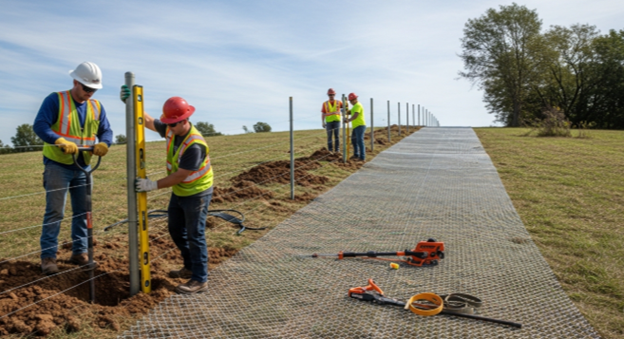
Installing a chain link fence on level terrain is straightforward but what happens when your yard slopes, dips, or has uneven ground? Many homeowners struggle with sagging panels, misaligned posts, and fences that look unprofessional. The good news is that installing a chain link fence on uneven ground is entirely possible but it requires careful planning, the right techniques, and the proper tools.
In this guide, we’ll explore every aspect of installing a chain link fence on uneven terrain. From understanding slope challenges to step-by-step fence installation instructions, real-life examples, and practical tips, this post is designed to answer all your questions and give you a fence that is durable, stable, and visually appealing.
Short Answer: How Do You Install Chain Link Fence on Uneven Ground?
Yes, you can install a chain link fence on uneven ground but it’s not as simple as a level lot. The key is to use the correct method for your slope:
- Step Method: Fence posts follow the slope, and panels “step” down in segments.
- Racking Method: The chain link fabric follows the terrain smoothly, creating a continuous slope.
- Hybrid Approach: Combines stepping and racking to adapt to mixed terrain.
Planning is critical: Measure your slopes, check local building codes, and prepare all necessary materials. Common mistakes include uneven tension, sagging panels, or posts set at inconsistent heights, which can compromise the fence’s stability and appearance.
Understanding Chain Link Fences and Uneven Terrain
What Makes Uneven Ground Challenging for Chain Link Fences?
Uneven terrain introduces several complications:
- Variations in slope: Hills, dips, and irregular ground make it difficult to maintain consistent post height.
- Risks: Sagging fabric, leaning posts, and uneven tension can occur without proper planning.
- Real-life example: A homeowner attempted to install a fence on a steep backyard slope without stepping or racking the panels. Within months, the top rails bent and the fabric sagged, requiring a complete redo.
Tools and Materials Needed for Uneven Ground Installation
To install a chain link fence on uneven terrain efficiently, you need the right tools and materials:
- Materials: Fence posts, top rails, chain link fabric, tension bars, caps, and stakes.
- Specialized tools: Post hole digger, level, tape measure, tensioning tools, pliers, and a rubber mallet.
- Safety gear: Gloves, eye protection, and steel-toed boots are recommended, especially on slopes.
Choosing the Right Installation Method
Choosing the proper method depends on your slope, aesthetic preference, and experience:
- Step Method: Posts follow the slope in steps; panels are attached horizontally between each post segment.
- Pros: Easier to install on steep slopes, provides strong post support.
- Cons: Fence appears segmented, which may not look seamless.
- Racking Method: Chain link fabric is bent slightly to follow the contour of the land, creating a continuous slope.
- Pros: Smooth, professional appearance.
- Cons: Requires skill and careful tensioning; fabric may be harder to stretch.
- Hybrid Method: Combines stepping and racking, ideal for mixed terrains with varying slopes.
How Do You Install Chain Link Fence on Uneven Ground
Plan and Measure the Slope
- Mark your property line using stakes or spray paint.
- Measure changes in elevation along the fence line.
- Calculate post spacing typically 8 to 10 feet to ensure stability.
- Identify areas that require stepping versus racking.
Dig and Set Posts
- Determine post depth according to local codes (usually 2–3 feet).
- Use concrete to anchor posts securely, especially on slopes.
- Ensure posts are plumb and evenly aligned; uneven heights can cause tension issues later.
- Tip: Use a string line to maintain alignment along uneven ground.
Install Top Rails and Fittings
- Adjust the top rail to follow the fence’s slope (stepped or racked).
- Secure rails with fittings at each post, checking for alignment.
- Ensure rails are firmly attached to prevent sagging over time.
Attach Chain Link Fabric
- Step method: Stretch fabric horizontally between posts at each step.
- Racking method: Carefully bend fabric to follow the slope, maintaining even tension.
- Use tension bars and pliers to secure the fabric to posts.
- Stretch the fabric evenly to prevent sagging; uneven tension is a common issue.
Finishing Touches
- Install tension bars, caps, and other hardware.
- Inspect for gaps, loose posts, or uneven tension.
- Optional: add a bottom tension wire for extra stability, especially on slopes with erosion risks.
Methods to Install Chain Link Fence on Uneven Ground
| Method | Pros | Cons | Best For |
| Step Method | Easier post installation, stable | Noticeable “steps” in fence line | Slopes with sharp elevation changes |
| Racking Method | Smooth appearance, modern look | Harder to stretch fabric, requires skill | Gentle slopes or aesthetic-sensitive areas |
| Hybrid Method | Combines stability and aesthetics | More planning and tools required | Mixed slopes or uneven terrain |
Common Questions Homeowners Ask (People Also Ask / FAQs)
How do you install chain link fences on uneven ground without sagging?
By using the correct installation method (stepping or racking), properly spacing posts, and ensuring even tension across all panels.
Can you slope a chain link fence?
Yes, using the racking method, the fabric can follow the slope for a smooth, continuous look.
What post spacing is best on a slope?
Typically 8–10 feet, but shorter spacing is recommended on steep slopes for added stability.
Do I need concrete for chain link posts on uneven ground?
Yes, concrete anchors are highly recommended to prevent posts from leaning or shifting.
Which method is better, stepping or racking?
It depends on slope severity and aesthetics. Step method is easier on steep slopes, while racking provides a cleaner, professional look on gentle slopes.
Can I DIY a chain link fence on hilly terrain?
Yes, with proper planning, tools, and patience. Steeper slopes may require professional assistance for safety and precision.
How do you adjust top rails for uneven ground?
Align rails with the post tops and adjust fittings for stepped or racked positions to maintain stability and tension.
How to maintain a chain link fence on slopes?
Inspect posts regularly, tighten tension bars, and ensure erosion doesn’t compromise post foundations.
Real-Life Examples and Installation Tips
Case Study: A homeowner in Colorado installed a backyard fence on a steep slope using the hybrid method. Posts were spaced 7 feet apart on steep areas, and tension bars were added along the bottom. For added durability and protection, they also applied ATX Fence Staining. The result was a stable fence that followed the terrain without sagging.
Lessons Learned:
- Accurate slope measurement is critical.
- Concrete posts prevent leaning.
- Even tension ensures the fence remains visually appealing.
- Safety precautions (gloves, boots, and eye protection) prevent accidents on uneven ground.
Tips: Consider using stakes and string lines for alignment, and stretch fabric gradually to avoid tearing. Visual diagrams can help plan step vs. racking sections.
Conclusion
So, how do you install chain link fences on uneven ground? With careful planning, the right tools, and the proper technique, any slope or uneven terrain can accommodate a strong, attractive fence. Key takeaways include:
- Measure your slopes accurately and plan post placement.
- Choose the right installation method (step, racking, or hybrid) based on your terrain and aesthetic preferences.
- Use concrete to anchor posts, maintain even tension, and check alignment.
Measure your slope, select the right method, and install a durable, professional chain link fence that follows your terrain flawlessly. With patience and precision, your uneven ground can host a fence that is both functional and visually appealing.