
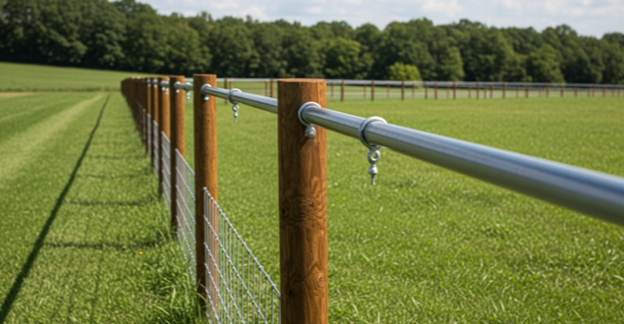
Installing a chain link fence on sloped or uneven terrain requires more than basic layout and post-setting. The ground angle affects tension, post height, bottom gaps, and long-term fence installation durability. When done correctly, the fence will follow the land naturally, remain secure at ground level, and maintain a clean, professional appearance for years.
This guide delivers the contractor-level process, method selection, tools, cost insights, and expert tips so you can achieve the best possible result.
Quick Answer: How to Install Chain Link Fence on Uneven Ground?
You can install a chain link fence on uneven ground using three proven methods:
- Racked fence – best for gradual slopes; the mesh follows the contour.
- Stepped fence – ideal for steep slopes; each section stays level.
- Hybrid fence – combines both for complex terrain.
Best method by slope:
- Mild slope → racked
- Steep slope → stepped
- Mixed terrain → hybrid
Understanding the Challenge of Uneven Terrain
Why Slopes, Dips, and Grades Affect Fence Installation
Uneven ground changes how tension distributes across the mesh. Without proper planning, this leads to sagging fabric, exposed bottom gaps, and leaning posts.
Measuring Ground Slope the Right Way (Contractor Method)
Professionals use:
- String line and level
- Line level with tape measure
- Transit or laser level for large projects
This determines post height transitions and method selection.
Soil Type, Drainage & Frost Line Considerations
Clay expands, sand shifts, and loam drains well. Post depth must go below the frost line to prevent seasonal movement.
Local Building Codes & Property Line Rules
Always verify:
- Setback requirements
- Fence height limits
- Utility marking before digging
Best Methods to Install Chain Link Fence on Uneven Ground
Racked Method (Best for Gradual Slopes)
The mesh is angled to follow the land.
Advantages:
- No bottom gaps
- Smooth visual flow
- Strong ground-level security
Limitations:
- Works best on mild slopes
- Over-racking reduces fence height on one side
Stepped Method (Best for Steep Slopes)
Each section remains level while stepping down.
Benefits:
- Clean, structured appearance
- Maintains full fence height
Challenge:
You must manage the gap under each section.
Hybrid Method (Professional Contractor Approach)
Used on rolling terrain.
Real scenario:
A backyard with a steep corner used stepped panels there, while the remaining gradual slope was racked for a seamless look and better security.
Tools & Materials Required for Uneven Ground Fence Installation
Essential Tools Checklist
- Post hole digger or auger
- Fence stretcher
- Come-along
- Level and string line
- Pipe cutter
Materials with Purpose
- Terminal posts for corners and ends
- Line posts for support
- Top rail for alignment
- Tension bars and bands for fabric strength
Material Quality vs Fence Longevity
Heavier-gauge mesh and galvanized posts resist movement and corrosion longer on uneven ground.
Pre-Installation Planning
Property Line Mapping & Utility Check
Mark boundaries and call for underground utility locating before digging.
Post Spacing Adjustments for Slopes
Reduce spacing slightly on steep areas for better strength.
String Line Layout Technique for Uneven Ground
Run a string that represents the final fence line this becomes your height and alignment reference.
Calculating Fence Height Transitions
Pre-plan post heights so the top rail flows smoothly.
How to Install Chain Link Fence on Uneven Ground
Step 1 – Marking Layout & Setting Reference Lines
Stake the fence path and run a string line to visualize grade changes.
Step 2 – Setting Terminal Posts at Correct Heights
These control the entire fence alignment. Set them deeper and perfectly plumb.
Step 3 – Installing Line Posts Along the Slope
Adjust each post height based on the string reference.
Step 4 – Attaching Top Rail with Grade Adjustments
The top rail should create a consistent visual line.
Step 5 – Hanging & Stretching Chain Link Fabric Properly
Unroll downhill and stretch evenly using a come-along.
Step 6 – Managing Bottom Gaps on Uneven Ground
Options:
- Tension wire
- Bottom rail
- Landscape grading
Step 7 – Tensioning, Tying & Final Alignment
Secure fabric to posts and rails without over-tightening.
Step 8 – Professional Finishing & Inspection Checklist
Check:
- Post plumb
- Mesh tension
- Ground clearance consistency
Racked vs Stepped vs Hybrid Fence Installation
| Feature | Racked Fence | Stepped Fence | Hybrid Fence |
| Best for slope type | Mild | Steep | Mixed terrain |
| Visual appearance | Smooth & flowing | Structured | Custom natural look |
| Security at ground level | Excellent | Moderate | Excellent |
| Installation difficulty | Moderate | Moderate | High |
| Cost range | $$ | $$ | $$$ |
| Professional recommendation | Residential yards | Sharp grade changes | Complex landscapes |
Cost Factors for Installing Chain Link Fence on Uneven Ground
Labor Complexity on Sloped Land
More measuring, custom post heights, and tension adjustments increase labor time, which is why many property owners rely on ATX Fence Staining for efficient and accurate installation on uneven ground.
Extra Materials for Grade Changes
You may need:
- Longer posts
- Additional tension wire
- More concrete
Cost Saving Tips Without Compromising Strength
- Use hybrid method instead of stepping the entire fence
- Plan layout to reduce post height variation
Common Mistakes to Avoid on Uneven Terrain
Incorrect Post Depth on Slopes
Shallow posts shift faster on angled ground.
Over-racking the Fence Fabric
This weakens mesh tension and reduces height.
Ignoring Drainage Flow
Water erosion around posts causes leaning.
Uneven Tension Distribution
Leads to long-term sagging.
Pro Tips from Fence Installation Experts
- Set terminal posts first, they control everything
- Install downhill for easier tensioning
- Use bottom tension wire for security on slopes
- Balance wind load with proper post spacing
Real-Life Installation Examples
Backyard Fence on a Steep Residential Slope
A stepped method maintained full height while tension wire closed the bottom gap for pet safety.
Commercial Chain Link Fence on Rolling Terrain
A hybrid approach reduced cost while maintaining a professional appearance.
DIY vs Professional Outcome Comparison
DIY often struggles with tension consistency; professionals achieve straight top rails and uniform mesh.
How to Maintain a Chain Link Fence Installed on Uneven Ground
Seasonal Ground Movement Inspection
Check for post shifting after winter.
Re-tensioning Techniques
Tighten fabric if sagging appears.
Preventing Bottom Rust & Soil Contact
Keep mesh slightly above soil where possible.
People Also Ask
Can you rack a chain link fence on any slope?
Only on gradual slopes; steep angles require stepping.
How much slope is too much for a chain link fence?
Typically anything over 15° needs stepped sections.
Should fence posts be level on uneven ground?
Posts must be plumb, not equal height.
How do you fill the gap under a chain link fence?
Use tension wire, bottom rail, or landscape grading.
Is stepping or racking stronger?
Racking provides better ground-level security.
What is the best fence height for sloped land?
Standard heights work if post transitions are planned correctly.
FAQs – How to Install Chain Link Fence on Uneven Ground
How deep should fence posts be on a slope?
At least one-third of the post length and below the frost line.
Can I install a chain link fence without leveling the ground?
Yes, that’s the purpose of racking and stepping methods.
What is the best method for very steep ground?
Stepped or hybrid installation.
How do professionals keep the fence straight on uneven terrain?
With string lines, pre-measured post heights, and controlled tensioning.
Does uneven ground increase installation time?
Yes, due to layout complexity and custom adjustments.
How do I prevent my fence from sagging on a slope?
Proper post depth, correct tensioning, and quality materials.
Which method looks best for residential properties?
Racked fences provide the most natural appearance.
Is a permit required for sloped fence installation?
In many areas, yes, always check local codes.
Conclusion: Choosing the Right Method for Long-Lasting Results
The success of a chain link fence on uneven ground depends on method selection, accurate layout, and proper tension control.
- Mild slope → racked for a seamless look
- Steep terrain → stepped for full height
- Complex landscape → hybrid for performance and cost balance
DIY is possible with planning, but complex grades benefit from professional installation to ensure durability, alignment, and security.
When installed correctly, a chain link fence on uneven ground will follow the terrain naturally, maintain structural strength, and deliver decades of low-maintenance performance.