
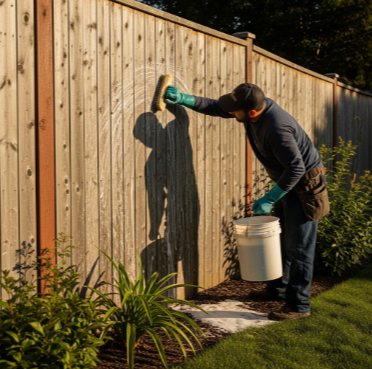
A dirty, gray, or algae-covered fence can make an entire backyard look neglected. The good news? You don’t need a pressure washer to restore it. In fact, many professionals prefer manual cleaning because it protects the wood, extends the fence’s lifespan, and delivers more controlled, even results.
This complete guide explains how to clean a wood fence without a pressure washer using proven, professional methods, the right solutions for every condition, and instructions that actually work in real life.
Short Answer – How to Clean a Wood Fence Without a Pressure Washer
- Use a bucket, soft or medium-bristle brush, and a wood-safe cleaner (vinegar, oxygen bleach, or a commercial product).
- Scrub with the wood grain, not against it.
- Rinse with a garden hose, not high pressure.
- Let the fence dry completely before sealing or staining.
This method removes dirt, mold, algae, and weathering without damaging the wood fibers.
Why Cleaning a Wood Fence Without a Pressure Washer Is Better for Wood Longevity
The Hidden Damage Pressure Washers Can Cause to Wood Fibers
High pressure forces water deep into the wood, leading to:
- Fuzzy, raised grain
- Surface gouging
- Premature rot
- Uneven stain absorption
Manual cleaning keeps the structure intact.
When Manual Cleaning Is the Professional’s Preferred Method
Fence contractors often choose manual washing for:
- Soft woods like cedar and pine
- Older fences
- Pre-stain preparation
- Spot treatments
Real-Life Example: Restoring a 10-Year-Old Cedar Fence Safely
A weathered cedar fence with green algae was cleaned using oxygen bleach and a deck brush. In one afternoon, the natural color returned without a single splinter or pressure mark.
Tools & Materials Professionals Actually Use
Essential Tools for Cleaning a Wood Fence Without a Pressure Washer
- 5-gallon bucket
- Garden hose with spray nozzle
- Soft/medium-bristle brush
- Pump sprayer (optional)
- Rubber gloves & eye protection
Best Cleaning Solutions for Different Fence Conditions
Light dirt & dust: Dish soap + warm water
Mold & mildew: Oxygen bleach solution
Algae & green buildup: Vinegar + water mix
Grease & stains: Commercial wood cleaner
Understanding Your Fence Type Before Cleaning
Cedar vs Pine vs Redwood – What Changes in the Cleaning Method?
- Cedar & redwood: Gentle scrubbing, lower moisture exposure
- Pine: Can handle deeper cleaning but dries slower
Painted vs Stained vs Raw Wood Fence Cleaning Approach
- Painted → Mild soap only
- Stained → Oxygen bleach preferred
- Raw wood → Any wood-safe cleaner
How to Clean a Wood Fence Without a Pressure Washer
Pre-Rinse and Surface Preparation
Spray the fence with a garden hose to remove loose debris and open the wood pores.
Apply the Cleaning Solution Correctly
Apply from bottom to top to prevent streaking. Let it sit for 5–10 minutes.
How to Scrub Without Damaging the Wood Grain
Use long, even strokes with the grain, applying light to medium pressure.
Proper Rinsing Technique With a Garden Hose
Rinse top to bottom until all residue is gone.
Drying Time That Prevents Mold Regrowth
Allow 24–48 hours of dry weather.
Post-Cleaning Inspection (Pro Checklist)
Check for:
- Missed spots
- Raised grain
- Loose boards
- Moisture level before sealing
Homemade vs Commercial Cleaners – What Works Best?
| Cleaning Method | Best For | Pros | Cons | Cost Level |
| Vinegar Solution | Light dirt & mildew | Eco-friendly | Slower on heavy stains | Low |
| Oxygen Bleach | Mold & algae | Safe for wood fibers | Needs dwell time | Medium |
| Store-Bought Wood Cleaner | Deep cleaning | Fast & powerful | Higher cost | Medium–High |
| Dish Soap Mix | Maintenance cleaning | Easily available | Not for heavy buildup | Low |
Pro Techniques for Stubborn Stains Without Using a Pressure Washer
Removing Black Mold Spots From a Wood Fence
Use a stronger oxygen bleach mix and a targeted scrub brush.
Cleaning a Gray Weathered Fence Back to Natural Color
Apply a wood brightener after cleaning to restore warm tones.
Spot-Cleaning vs Full Fence Wash – When to Use Each
Spot clean for localized stains. Full wash for color restoration before staining.
How to Clean a Wood Fence Without a Pressure Washer Before Staining or Sealing
Moisture Level Test (Used by Professionals)
Sprinkle water on the wood:
- Absorbs quickly → Ready to stain
- Beads up → Still too wet
How Long to Wait Before Applying Stain or Sealant
Typically 24–48 hours, depending on weather.
Common Mistakes That Ruin Wood Fences
Over-Scrubbing Against the Grain
Causes permanent surface damage.
Using Chlorine Bleach the Wrong Way
It weakens wood fibers and affects surrounding plants.
Skipping the Drying Phase
Leads to trapped moisture and peeling stain.
Maintenance Schedule Used by Fence Cleaning Experts
Annual Cleaning Plan
Deep clean once per year.
Seasonal Quick-Wash Routine
Light rinse every 3–4 months to prevent buildup.
Safety & Eco-Friendly Cleaning Considerations
Protecting Plants, Soil, and Pets
Pre-wet nearby plants and cover sensitive areas.
PPE Professionals Recommend for Wood Cleaning
- Gloves
- Safety glasses
- Long sleeves
DIY Manual Cleaning vs Pressure Washing
| Method | Average Cost | Risk Level | Skill Required | Wood Safety |
| Manual Cleaning | Low | Very Low | Easy | Excellent |
| Pressure Washer | Medium | High | Moderate | Risky |
Real-World Case Study – Transforming a Dirty Backyard Fence in One Afternoon
Initial Condition
Gray panels, algae growth, uneven discoloration.
Products & Method Used
Oxygen bleach + deck brush + garden hose rinse.
Final Results & Time Taken
Fence restored in 4–5 hours, ready for staining in two days.
FAQs – How to Clean a Wood Fence Without a Pressure Washer
What is the best homemade solution for cleaning a wood fence?
A vinegar and water mix works well for mild dirt and algae.
Can I use dish soap to clean my wooden fence?
Yes, for maintenance cleaning and light grime.
How do you remove green algae from a wood fence without a pressure washer?
Use oxygen bleach, let it dwell, then scrub gently.
How long does it take a wood fence to dry after washing?
Usually 24–48 hours in dry weather.
Is vinegar safe for all types of wood fences?
Yes, when diluted properly.
Do I need to seal the fence after cleaning?
Sealing protects against moisture and UV damage.
How often should a wood fence be cleaned?
Once a year for deep cleaning.
What is the fastest way to clean a large wooden fence manually?
Use a pump sprayer for faster solution application and work in sections.
Conclusion – The Safest & Most Effective Way to Clean a Wood Fence Without a Pressure Washer
Cleaning your fence manually isn’t just an alternative, it’s often the best professional method for preserving wood strength, appearance, and lifespan. With the right tools, the correct cleaning solution, and a structured process, you can remove years of dirt, algae, and discoloration in a single day without risking permanent damage. Follow this guide and your fence will not only look new again but will also be fully prepared for ATX fence staining, ensuring long-term protection and maximum curb appeal.